How to Answer Sizing Questions in Live Chat
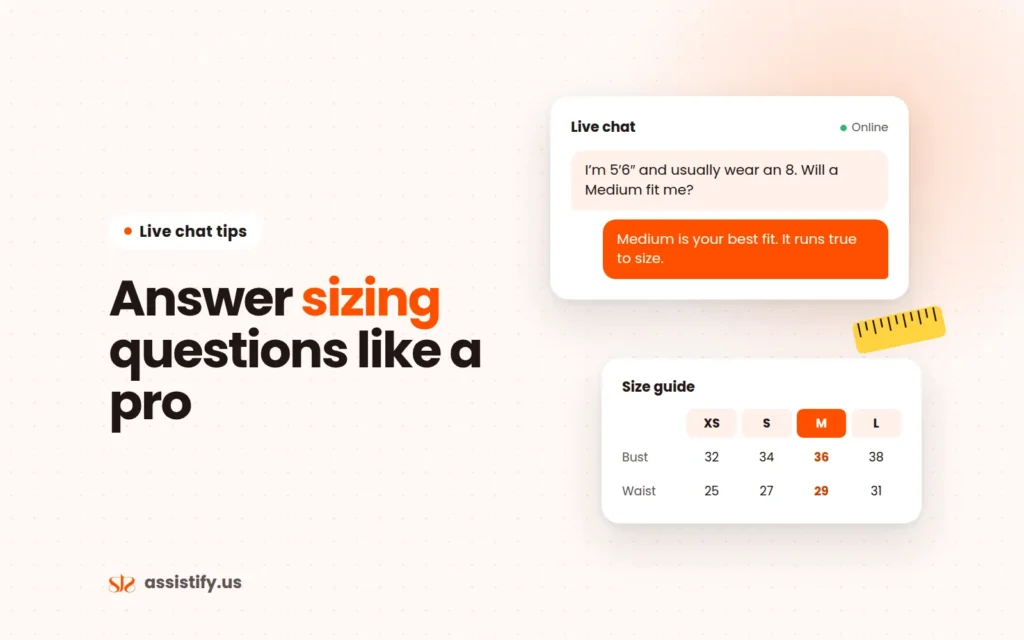
When a shopper asks “does this run small?”, they’ve already chosen the product. They just aren’t sure which size to buy. Answer well and they check out. Answer slowly, or with “it depends”, and they leave, or they buy two sizes and return one.
We’ve answered sizing questions for clothing, activewear and swimwear brands for years. Here’s the approach our agents use.
What your agent needs before they start
An agent can only be as accurate as the information they have. Before go-live, collect:
- The size chart for each product, not just one chart for the whole store. Different styles fit differently.
- Fit notes: runs small, true to size, relaxed or oversized, and whether to size up between sizes.
- Fabric and stretch. A stretchy fabric and a rigid one in the same size fit very differently.
- Model details: the model’s height and the size they’re wearing in the photos.
- Your exchange policy, so the agent can mention it with confidence.
If your team keeps this in one shared document, a new agent can answer accurately from day one.
A simple four-step answer
- Ask one useful question. “What size do you usually wear in [a well-known brand]?” or “What’s your waist measurement?” One question, not five.
- Check the product’s fit notes. Don’t answer from memory or from a different product.
- Recommend one size, and say why. “I’d go with the M, because this style runs a little small.”
- Mention the exchange policy. It takes away the last bit of doubt.
Example replies
Between two sizes
Great question! This dress runs a little small, so if you’re between an S and an M, I’d go with the M. It’ll give you a relaxed fit. And if it’s not right, exchanges are free within 30 days.
“Is it true to size?”
Yes, this one is true to size. Our model is 5’9″ and wearing a size S. If you like a looser fit, you could size up one.
Shopper gives their measurements
Thanks! With a 30″ waist, the 30 will fit you best in these jeans. They’re a stretch denim, so they’ll give a little after a few wears rather than feeling loose straight away.
Kidswear
These run true to age, but they’re cut slim. If your little one is tall for their age or between sizes, I’d go up a size so they get more wear out of them.
Change the details and the exchange terms to match your products and policy. The structure stays the same: one recommendation, one reason, and a safety net.
What not to do
- Don’t paste the whole size chart and leave the shopper to work it out. That’s what they were trying to avoid.
- Don’t guess. If the fit notes don’t cover it, say you’ll check, then come back within minutes.
- Don’t say “it depends on your preference” without then making a recommendation.
Use the questions to improve your product pages
Keep a simple log of which products get the most sizing questions. If one style gets asked about every day, its product page is missing something, usually a clear fit note or the model’s size. Fix the page and the questions stop. We include this in the report we send our clients every two weeks.
Want this handled for you?
Our live chat agents answer sizing, shipping and product questions on your store under your brand name, during the hours you choose. See how we work with clothing and apparel brands and kids’ clothing brands, or book a 20-minute call.
About the author. Saif Sheikh has worked in customer support since 2017. He started in an in-house support job, saw that online stores needed a better option, and went freelance. Since then he has led a team of 22 people, supported more than 100 brands and trained many newcomers, free of charge, to start their own freelancing careers. More about Assistify.